
Why We Put Sonos Speakers on a Sonos Amp (and What You Lose With Any Other Speaker)
A Sonos Amp will drive almost any passive speaker. Put a pair of twenty-year-old in-ceilings on it and music comes out, and it will sound fine. So when we spec Sonos in-ceiling, in-wall and outdoor speakers by Sonance for a house, the fair question is whether we are selling the client a logo. We are not. There is a layer of the Sonos system that only switches on when the Amp recognizes the speakers it was designed with, and that layer is most of the difference between an amplifier with speakers attached and a tuned room.
- The Sonos Amp recognizes Sonos architectural speakers across the wire and loads a speaker-specific EQ. No other speaker gets that.
- Trueplay only runs on recognized speakers. It is the room tuning that makes in-ceiling sound come from the room, not the ceiling.
- Rules: one speaker model per Amp, nothing between Amp and speaker, up to three pairs per Amp, tune after the furniture is in.
- Outdoor pairs get the EQ profile and limiter; Trueplay does not run outside.
- Third-party speakers still have a place: remodels, invisible speakers, rear surrounds behind a soundbar.
The Amp knows what it is connected to
Sonos and Sonance co-designed the architectural line, and the speakers carry a hardware signature the Sonos Amp and Amp Multi can read across the speaker wire. Connect a pair of Sonos In-Ceiling or In-Wall speakers and the app says so within seconds, and three things happen that do not happen for any other speaker:
- A speaker-specific EQ profile loads. Sonos measured these exact drivers in these exact enclosures and built the correction curve to match. The Amp is no longer sending a generic flat signal and hoping; it is compensating for the specific speaker on the other end of the wire, the way Sonos does inside its own all-in-one products.
- Trueplay becomes available. You walk the room with an iPhone while the speakers play a test sweep, and the system measures how the ceiling height, the glass, the hardwood and the furniture are coloring the sound, then tunes the output to that room. On a 16-foot vaulted great room with a stone fireplace and a wall of windows, which describes half the houses we work in, this is the difference between hearing the room and hearing the music.
- The limiter and the dual-mono option appear. The limiter protects the drivers and keeps the balance smooth at high volume, because the Amp knows exactly how much the speaker can take. Dual-mono lets a pair that had to be placed too far apart for stereo play both channels from each speaker.
Wire a third-party speaker to the same Amp and none of that unlocks. You get a good amplifier driving a speaker it has never met, with the generic bass and treble sliders. It works. It just is not the product.
What unlocks, and what does not
| On the Amp | Sonos In-Ceiling / In-Wall / Outdoor | Any other passive speaker |
| Speaker-specific EQ profile | Loads automatically | No; generic bass and treble |
| Trueplay room tuning | Yes indoors | No |
| Limiter matched to the driver | Yes | No |
| Dual-mono option | Yes | No |
| Plays music | Yes | Yes, and it sounds fine |
Why that matters more for hidden speakers than for any other kind
A floor-standing speaker in a listening room was designed, voiced and placed to sound right on its own. An in-ceiling speaker is a driver firing straight down from a hole in a surface it did not choose, in a room it was not voiced for, usually pointed at nobody in particular. Of all the speakers in a house, it is the one that most needs correction, and the one that almost never gets it, because the amplifier behind a typical architectural install is a plain multichannel amp with no idea what it is driving.
That is the gap the Sonos and Sonance pairing closes. The speaker is known, so the correction starts from the right place, and then Trueplay finishes the job against the actual room. In practice this is why a Sonos architectural system in a great room sounds like the music is in the room, not falling out of the ceiling. Put the same Amp on the same ceiling with a tuned Sonos pair and a respectable third-party pair, untuned, and the difference is not subtle. The untuned pair is louder in the midrange, thinner on the bottom, and sounds like it is coming from exactly where it is, which is above your head.

The rules that make it work
Detection and tuning come with conditions, and getting them wrong is the most common reason we see a Sonos architectural system that sounds like it was never tuned. These are the ones we design around:
- Do not mix speaker types on one Amp. One Amp, one model of speaker. In-ceilings on one, in-walls on another. Mixed pairs and the Amp will not identify the load, so Trueplay stays off.
- Nothing between the Amp and the speaker. No in-wall volume knobs, no impedance-matching switchers, no speaker selectors. They were a reasonable idea in 2005; in a Sonos system every zone has its own amplifier channels and the volume lives in the app and on the keypad, so the hardware in the wall is not needed, and it blocks detection.
- Up to three pairs per Amp, all the same model. Fine for a long hallway or a big open plan where several pairs cover one zone. If two spaces need different volumes, they are two zones and two sets of channels.
- Outdoor speakers are the exception. The Sonos Outdoor by Sonance pair is detected and gets its EQ profile, but Trueplay does not run outdoors, for the obvious reason that there is no room to tune. The patio still benefits from the speaker-specific correction and the limiter.
- Tune after the furniture is in. Trueplay measures the room as it is. We run it at final commissioning, not at rough-in, and we re-run it if the client later adds a rug the size of a tennis court.

When a third-party speaker is still the right call
We are not purists about it, and there are jobs where we put other speakers on a Sonos Amp on purpose:
- Existing speakers in a remodel. If a house already has decent in-ceilings in every room and the budget is going to the network and lighting, we will drive them from Sonos Amps, set the EQ by ear, and plan to swap the great room pair first when the client is ready. Better music in every room today beats perfect music in two rooms.
- Invisible and specialty speakers. Plaster-over speakers, speakers inside millwork, certain outdoor landscape systems. Nobody makes a Sonos-detected version of those, and the room is usually one where the aesthetic decision wins.
- Surround duty behind a soundbar. If an Amp is feeding rear surrounds for an Arc Ultra, the soundbar’s own Trueplay handles the room, and the rears get level and bass adjustment regardless of brand. We still prefer Sonos in-ceilings there, but it is less critical.
What we will not do is spec a whole-home system around a bargain architectural speaker to save a few hundred dollars a pair, and then hand the client an app that says “Trueplay unavailable” in every room. The tuning is the product. Buying the Amp without the speakers it tunes is buying half of it.
When one zone becomes four, the same recognition and tuning carries over to the Amp Multi. Our walkthrough:
Frequently asked
Will my existing in-ceiling speakers work on a Sonos Amp? Yes, any 4 to 16 ohm passive speaker plays. They will not be recognized, so no Trueplay or matched EQ; we set the EQ by ear and plan the swap room by room.
Does Trueplay need an iPhone? Yes, Trueplay tuning for architectural speakers runs from an iPhone or iPad microphone. We bring one; you do not need to own one.
Can I put a volume knob in the wall? Not between the Amp and the speaker. Volume lives in the app and on a keypad; a knob or selector in the line blocks speaker detection.
How many pairs per Amp? Up to three of the same model, as one zone. Rooms that need separate volume are separate zones and separate channels, which is what the Amp Multi is for.
Is the Sonos speaker worth the price over a bargain pair? In a great room with glass and a high ceiling, yes, because the tuning is the product. In a laundry room, we will tell you honestly if it is not.
How this shows up in a Shield design
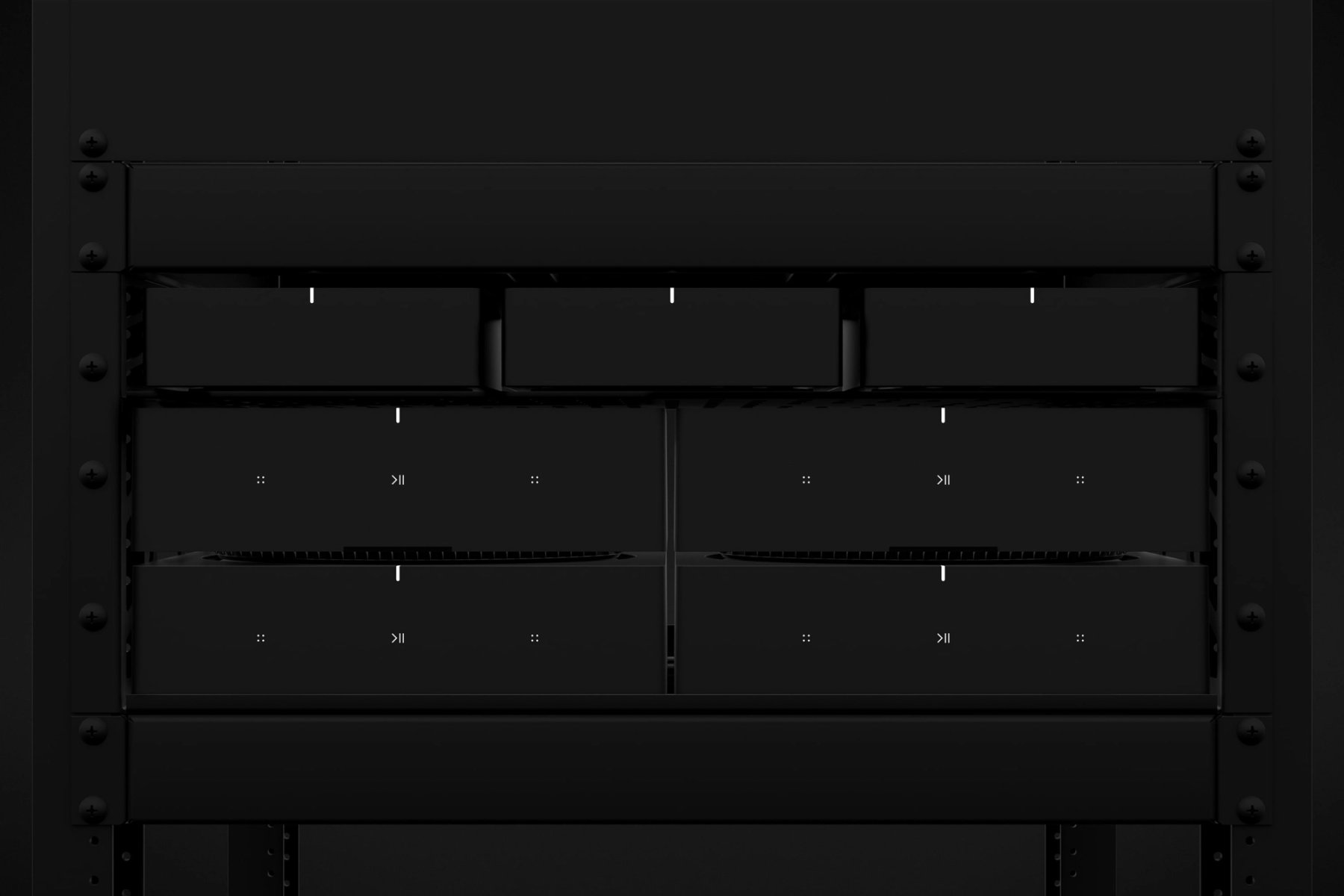
Every whole-home audio plan we deliver lists, per zone, the speaker model, the count, the amplifier channel assignment, and whether Trueplay applies. In a typical custom build that means 8-inch in-ceilings in the great room and kitchen, 6-inch in the bedrooms and baths, Sonos Outdoor on the deck, and an Amp Multi in the rack running four zones with every pair detected, profiled and tuned on handover day. If the house is being built, the speaker locations get rough-in brackets during pre-wire so there is never a volume knob or a speaker switch in the walls to begin with.
Already have Sonos Amps and ordinary speakers? Bring us the room list. We will tell you which rooms gain the most from a recognized pair and Trueplay, usually the great room first, and leave the rest alone until you are ready.
Shield Low Voltage designs and installs Sonos whole-home audio across the Wasatch Front and Back, from Lehi to Park City. The Amp, Amp Multi and the full Sonance architectural line are in our Sonos store. Images and video courtesy of Sonos.
