
Home Theater Installation in Utah
Built for the
Way You Watch.
Dedicated cinemas, media rooms and whole-home audio for Utah homes — designed to the room, wired before the drywall, calibrated by measurement, and reduced to one button. From Salt Lake and Lehi to Park City and the Wasatch Back.

Dedicated Theaters
A Room That Does One Thing Perfectly
A dedicated theater is the only room in the house where every decision serves the picture and the sound. Get the room right and modest equipment sings; get it wrong and no amount of equipment rescues it.
- Projector and screen sized to the seating distance, or a large direct-view display where the room suits it better
- In-wall and in-ceiling speakers positioned to the seats rather than to the drywall
- Dolby Atmos laid out properly, including the height channels, on a 7.1-plus receiver or separate processor and amplifiers
- Acoustic treatment where it matters: first reflection points, the back wall, and the ceiling above the front rows
- Calibration at the end, by measurement, so the room is set to what it actually does
Basements are the usual home for these along the Wasatch Front, and a basement being finished is the ideal moment to call: speaker positions and cable runs cost almost nothing before the drywall goes up. Building on the Wasatch Back? See our Park City home theater work.

Media Rooms
Some People Don’t Need a Cinema
They want the family room to sound excellent and look like nobody installed anything. That is a different problem, and for most Utah homes the more useful one to solve.
- Televisions mounted flush to the wall, with power and signal brought in behind so there is no cable and no box
- Sources in a closet or rack elsewhere, so the room holds a screen and nothing else
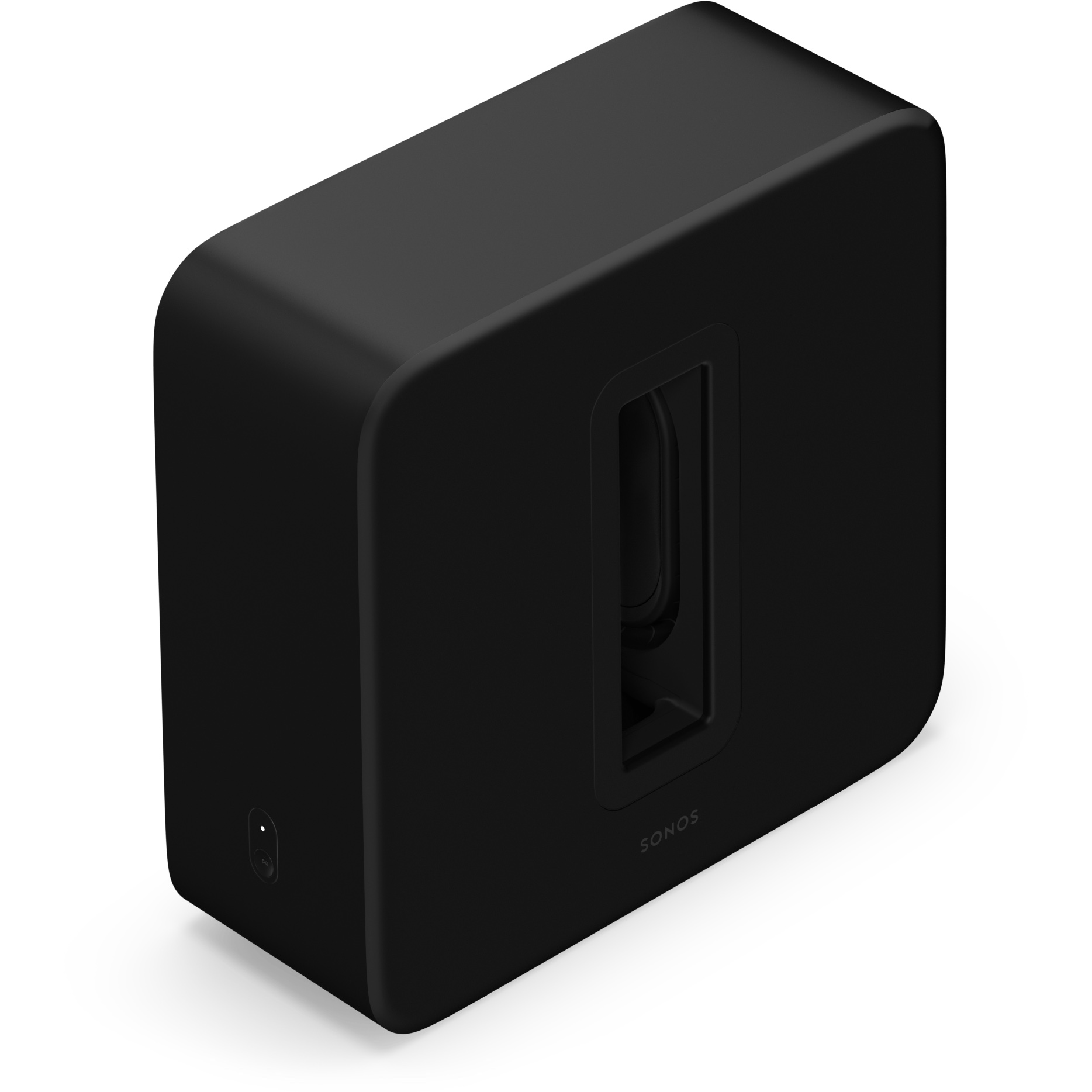
- A Sonos Arc Ultra with a Sub and rear Era 300s where the room wants simple, or discreet in-ceiling speakers on an amplifier where it wants more; we will say which
- One remote, or the same app and voice as the rest of the house, instead of four
A media room done well is often the better spend. We would rather talk you into the right room than the bigger one. Our Sonos home theater guide covers where the simple route ends and the receiver begins.

Whole-Home Audio
Music Everywhere,
Speakers Nowhere
Audio in the kitchen, the primary suite, the patio and the shop: independent when people want different things, together when they don’t.
- Multi-zone control on Sonos amplifiers, so the kitchen and the patio are genuinely separate rooms
- In-ceiling and in-wall speakers painted to the ceiling, which disappear from a few feet away
- Weatherproof patio and landscape speakers that survive a Utah winter
- Party mode when you want the whole house on one thing
- Run from the app, a wall panel, a Lutron keypad by the door, or Josh.ai by voice
Distributed audio over the network means adding a zone later is a cable run rather than a new amplifier. Worth wiring for more rooms than you plan to use on day one.
Anatomy of a Home Theater
What a Dedicated Theater
Actually Includes
Every theater we build in Utah is a chain of decisions, and the order matters: the room, then the sound, then the picture, then the control. Here is what is inside a finished one and roughly where the money goes.
Budget
What a Home Theater Costs in Utah
Honest ranges, installed, for the Wasatch Front and Back. The room and the finish carpentry are not in these numbers; the electronics, speakers, screen, treatment, rack, wiring, programming and calibration are.
$6,000 to $15,000Flush-mounted 65–85” display, Sonos Arc Ultra with Sub and rear Era 300s, concealed wiring, one remote or voice.
$15,000 to $40,00077–98” display or short-throw projector, 5.1 or 5.1.2 in-ceiling and in-wall surround on a receiver, concealed rack, scene control.
$60,000 to $150,0004K laser projector and acoustically transparent screen or large direct-view display, 7.1.4 Atmos with architectural speakers and dual subwoofers, treatment, tiered-seating wiring, lighting scenes, full calibration.
$150,000 to $400,000+Separates and multichannel amplification, reference speakers, native 4K or LED-wall picture, engineered isolation, four-subwoofer bass management, bespoke seating and finishes.
Not sure where your project lands? The smart home budget calculator gives a first number in two minutes, and a site visit turns it into a real one. Pre-wiring a future theater during a build is usually a few thousand dollars and keeps every option open.
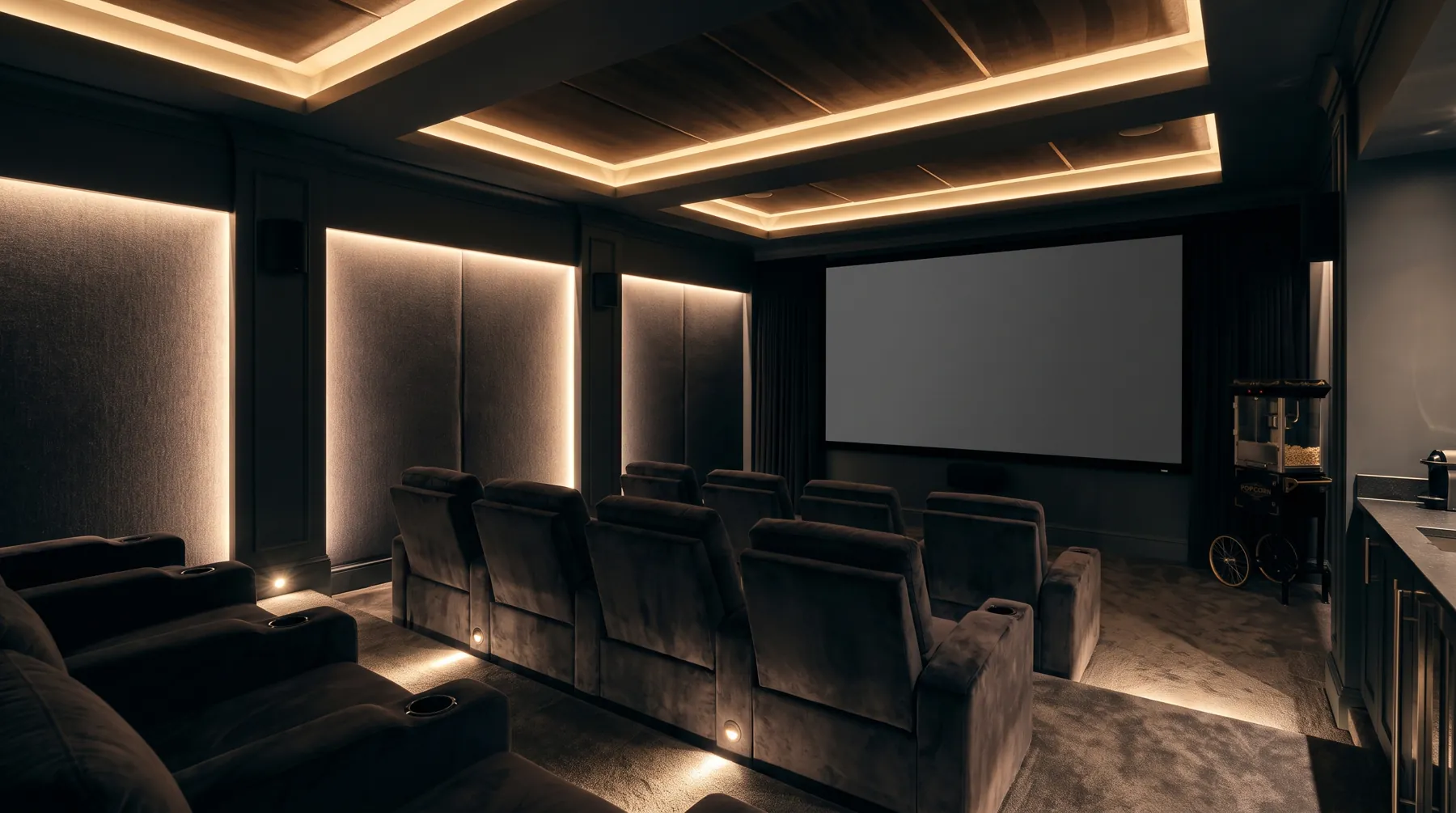
Set the Scene
Theater Lighting That
Knows Its Cues.
Half of what makes a room feel like a theater is light that behaves like part of the show, and it is all low-voltage strip work we build in while the room is framed:
- Recessed ceiling coves: warm indirect glow instead of downlights bouncing off the screen
- Fabric-panel washes: strips that graze the acoustic panels and make the walls disappear
- Step and aisle lights: find your seat mid-movie without waking the room up
- Scene control: one tap and the lights fade, shades drop, projector on; intermission brings them halfway back
Accent lighting runs through the whole house, not just the theater: coves, slat walls, mirrors and landscape, on our lighting & shades page.

The Part Nobody Sees
Judge an Installer
by the Closet
Anyone can hang a television. The rack is where you can tell whether the person who wired your house expected to be judged on it later.
- Everything on a rack, labeled, on managed power and a UPS, with room left to add to it
- Cable dressed and laced properly, because it is the difference between a ten-minute fault and a wall coming open
- Ventilation planned, because heat is what actually kills this equipment
- Documented, so the next person, even if it is not us, can work on it
It also depends on the network. Streaming, control and distributed audio all ride on it, so we design that first, and in a new build the pre-wire is where all of this is decided.
How We Work
Two Ways In: a New Build,
or the Room You Already Have
Most of our theaters are inside a custom build or a basement finish, where we are one sub among twenty. The rest are existing rooms that want to become one. The process is different, the result is not.
Where We Build Them
Home Theaters Across the Wasatch Front and Back
Shield Low Voltage is a licensed Utah low-voltage contractor based in Lehi. We design, wire, calibrate and support home theaters and media rooms in Salt Lake City, Holladay, Cottonwood Heights, Sandy and Draper; Lehi, Alpine, Highland, Cedar Hills and Mapleton; Park City, Deer Valley, Heber City and Midway; and Kaysville, Farmington and Fruit Heights in Davis County. See everywhere we work.
What We Install
Specified around the room and the budget, not around whatever we happen to stock.





Common Questions
Utah Home Theaters, Answered.
How much does a home theater cost in Utah?
A soundbar-based media room installed cleanly runs $6,000 to $15,000; a media room with in-ceiling surround on a receiver $15,000 to $40,000; a dedicated theater with projection, Atmos, treatment and calibration $60,000 to $150,000; and reference cinemas go well beyond that. The room drives the number as much as the equipment, so we quote after seeing the plans or the space and tell you where the money is worth spending.
What is the difference between a dedicated theater and a media room?
A dedicated theater is a purpose-built room: controlled light, acoustic treatment, tiered seating and a projector or large screen sized to the seats. A media room is a living space that also performs: a flush-mounted TV, discreet in-ceiling speakers or a Sonos Arc Ultra system, and everything hidden. Many homes do both, a cinema in the basement and a media room upstairs.
Projector or a big TV?
For a dark, dedicated room a 4K laser projector on an acoustically transparent screen is still the best picture per dollar and lets the front speakers sit behind the image. A 98-inch or larger direct-view display makes sense when the room has windows, doubles as a daytime family room, or when you want no bulb and no throw distance to manage. We model both for your room and show you the numbers.
Is Sonos enough for a home theater?
For a media room, often yes: an Arc Ultra, a Sub 4 and two Era 300s give real Dolby Atmos with nothing on the walls, and it joins the whole-home system. A dedicated theater outgrows it. Once you want seven or more speakers in the walls and ceiling, a projector and seat-by-seat calibration, the room gets a receiver or separates and architectural speakers, and Sonos stays upstairs for music. Our Sonos home theater guide draws the line in detail.
Can you add a theater to a finished basement?
Yes. In-ceiling speakers, a flush display and a concealed rack are routine retrofits; we fish wire where it counts and tell you plainly which wall needs to open. What is hard to add later is sound isolation, so if the basement is still framed, call now.
What does calibration actually do?
It sets the room to what it really measures rather than what the box assumes. We measure every seat, correct speaker levels, distances and room response, set the picture to reference brightness and color, and save it all behind one scene. It is the difference between a room full of good equipment and a theater.
Will the bass bother the rest of the house?
Not if the room is built for it. Resilient channel or isolation clips, insulated and double-layered walls, a solid-core door with seals and subwoofers placed by measurement keep the energy in the theater. This is why we want to be involved while the basement is framed; isolation is cheap at the studs and expensive afterward.
Can guests and kids run it without a tutorial?
That is the point of the control layer. One remote or one keypad button starts a movie; lighting and shades follow; the system resets itself when the room is empty. With Josh.ai the room also answers to “movie night” in plain speech, and volume limits keep settings where you left them.


Theater and audio guides
 The Sonos Home Theater Guide, With Our Honest Take on When to Go CustomRead the guide →
 Sonos Amp Multi: Eight Channels, Four Zones, One Rack Unit, Shown in MotionRead the guide →
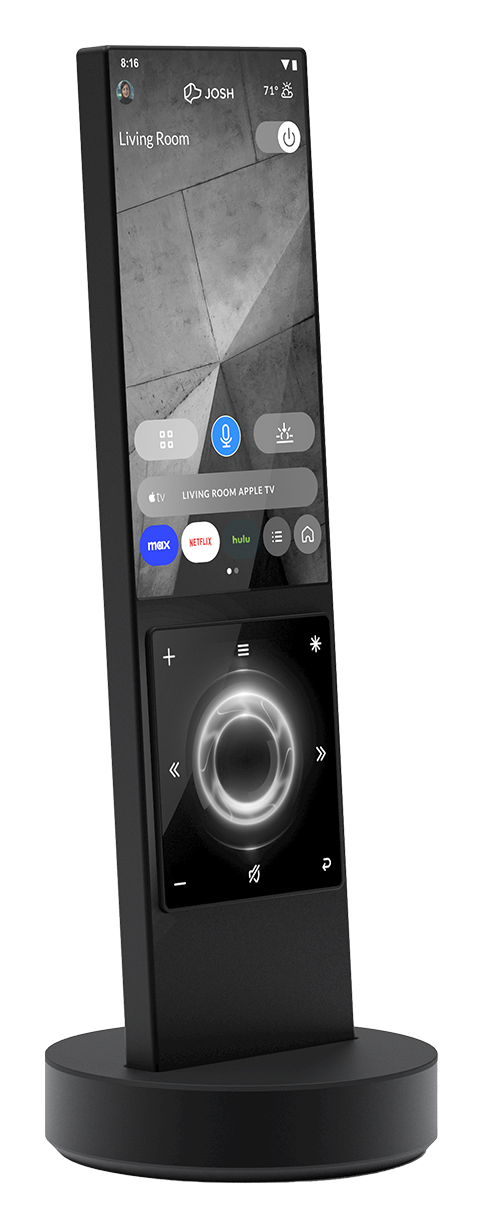
 The Josh Cinema Remote: A Theater Remote That Rewrites Its Own ButtonsRead the guide →
 What to Run Before the Drywall Goes UpRead the guide →
Let’s Design
the Room.
Send us the plans, or the room you already have. We will tell you what it can realistically do, and what it would take to do it properly.