
Walk into any big-box store and you can leave with a camera, a doorbell, and an app. So why do people still pay a local company to build them a security system? Because a system is different from a pile of gadgets — and the difference shows up on the worst day you’ll ever have in that house. We install these every week across Utah. Here is what a smart security system actually gets you, without the brochure language.
1. It tells you what you actually want to know
An old alarm had two states: quiet and screaming. A smart system talks to you in useful, specific sentences all day long. The garage has been open for twenty minutes. The kids are home — the front door unlocked with their code at 3:41. A package hit the porch. Someone is standing at the door who hasn’t rung the bell yet.
That last one matters more than people think: modern panels and doorbells announce a person before they knock. Most of what a security system does on a normal week isn’t stopping crime — it’s replacing that little jolt of “did I close the garage?” with an answer.
2. It responds even when you can’t
A camera that sends you a clip is only useful if you’re looking at your phone. A professionally monitored smart system doesn’t wait for you: the panel has its own cellular radio and its own battery, so it reports a break-in, a fire, or a CO alarm to a monitoring center even if the power is out, the WiFi is down, or the intruder cut the line at the street. Dispatch happens whether you’re in a meeting, on a flight, or asleep.
Modern panels also survive the oldest trick in the burglar’s book — smashing the keypad. The signal has already left the house before the panel hits the floor.
3. It protects against the disasters that are more likely than burglary
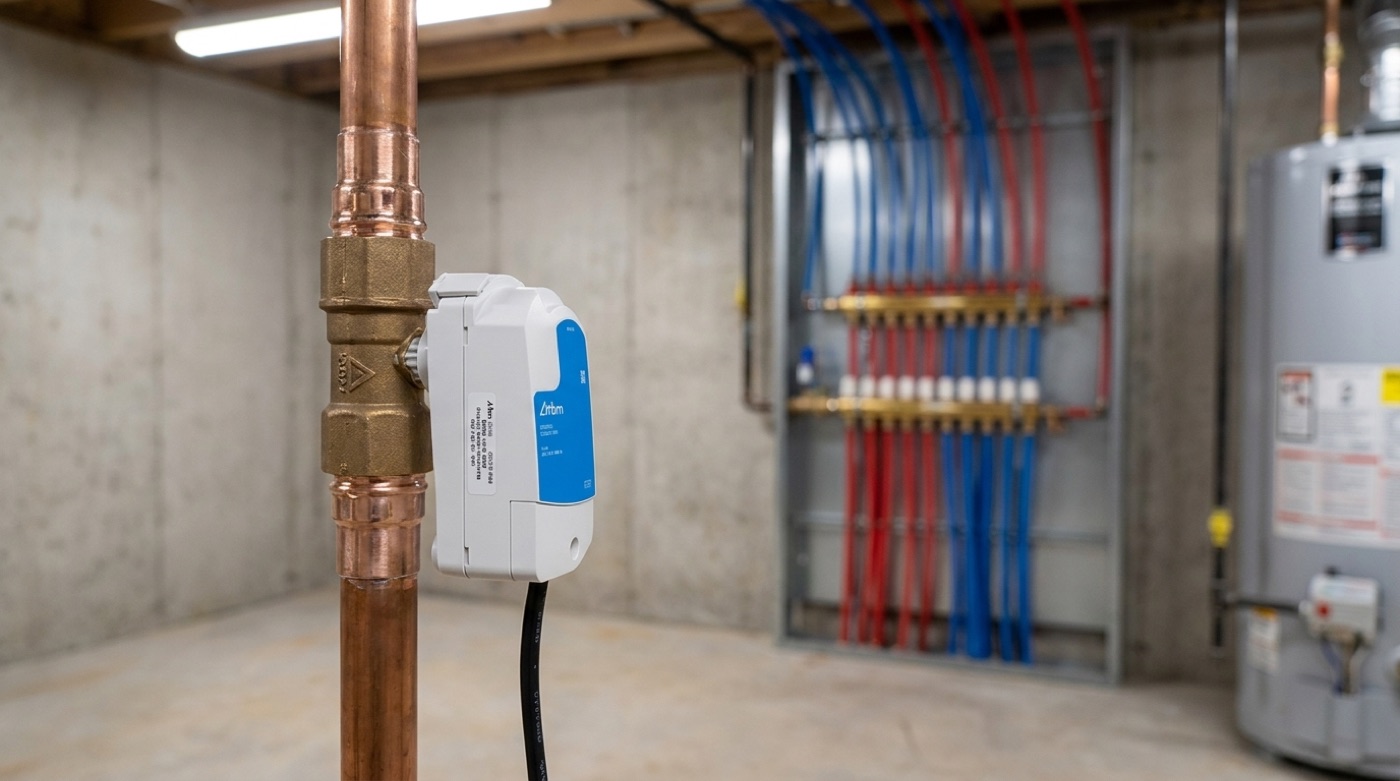
Statistically, water does more damage to Utah homes than burglars do. A smart system doesn’t care which enemy shows up: leak sensors under the water heater and behind the washer catch a drip before it becomes a flooded basement, and a smart shutoff valve can close the main line by itself while the alert is still buzzing your phone. Monitored smoke and CO detectors get the fire department moving even when nobody’s home to smell smoke. Your insurance company knows all this — which is why most offer real discounts for monitored systems. Ask yours; the discount often covers a meaningful chunk of the monitoring cost.
4. It makes the house easier to live in every single day
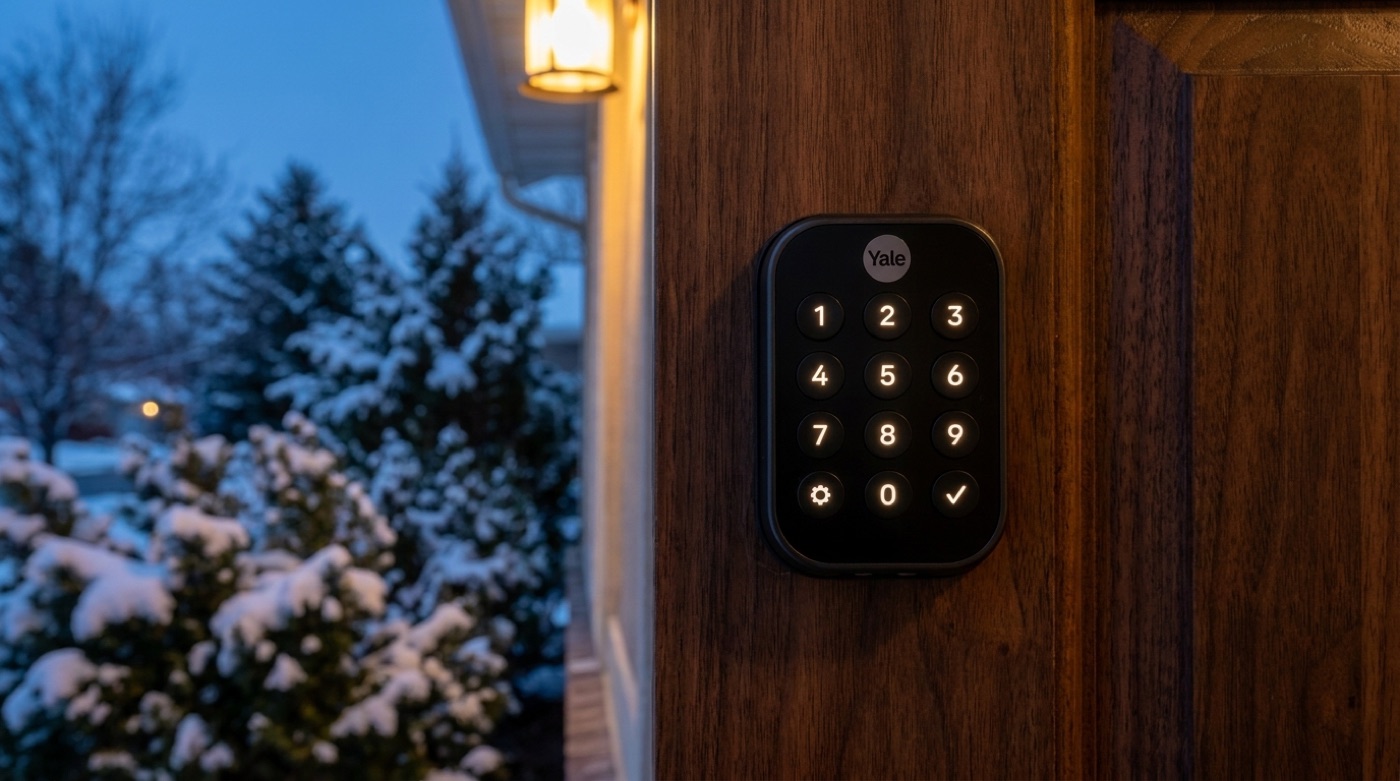
This is the part the security industry undersells. The same system that guards the house also runs it: door codes for the cleaner that only work Tuesday mornings. Locks that lock themselves at 10 PM. A thermostat that stops heating an empty house and knocks real money off the winter gas bill. Lights that come on when the alarm trips — or just when you pull into the driveway. One app, not nine.
Security systems are the rare purchase that pulls double duty: an insurance policy you also use for convenience two dozen times a day.
5. It scales — and it moves at the speed of your life
A smart system is a platform, not a product. Start with a panel and door sensors at $25/month monitoring; add a doorbell when porch pirates find your street; add cameras when the teenager starts driving; add the water valve after your neighbor’s supply line lets go. Nothing gets thrown away. And when you move, codes change in seconds — no rekeying, no wondering who still has a garage remote.
6. The sign in the yard still does real work

Burglars interviewed in prison studies say the same things: they avoid houses with visible alarms and cameras. Most break-ins are decided at the curb in a few seconds. A yard sign, a doorbell camera, and a visible panel move your house from “easy” to “why bother” — the cheapest security upgrade that exists. It works even better when the equipment behind the sign is real.
The honest part
Do you need all of this? Not always, and we’ll say so at the walkthrough. A small apartment might genuinely be fine with a DIY kit — you give up professional sensor placement, cellular dispatch, and having a local human to call, but for some situations a kit is enough, and if that’s you we’ll tell you. Smart systems also cost more up front than a box-store bundle, and anything with a screen eventually needs service. What you’re buying with a professional install is that it works — sensors placed by someone who does it daily, wireless that reaches the detached garage, and a company twenty minutes away that answers the phone in a couple of years when something beeps at 2 AM.
What it looks like in practice
The image at the top of this post is the actual equipment we install: the Qolsys IQ panel that runs the show, the Alarm.com doorbell and cameras, Yale locks, monitored smoke detection, the water shutoff valve, and the app that ties it together. If you want to see what that would look like on your house — new build, existing home, or taking over a system someone else installed — book a free walkthrough. No pressure, real numbers in writing, and monitoring is month to month.
Almost every article answering this question was written by a company that sells monitoring, and almost every one of them concludes that yes, you should buy monitoring. We sell it too, so read this with that in mind.
But the honest answer is not yes or no. It depends on where in Utah you live — and in Salt Lake City the usual advice is not just incomplete, it is wrong. There is a rule there that changes the entire calculation, and in twenty years of it being on the books we have never once had a customer arrive already knowing about it.
The short version
- Monitoring means a staffed center watches your alarm around the clock and makes the call to police, fire or EMS when you cannot. Typically $25–$55 a month.
- In Salt Lake City, police are not dispatched to an unverified burglar alarm at all. The city has required verification since December 2000.
- Verification means video, audio, an eyewitness or a private guard confirming an actual crime. Video is how most people meet it now.
- Elsewhere in Utah, officers do respond — but no city guarantees it, and false alarms cost you money.
- Fire, carbon monoxide and freeze detection are the strongest case, and they have nothing to do with burglary. A monitored low-temperature sensor at a mountain cabin is the highest-value device we install.
- Monitored systems typically earn a 5–20% homeowners insurance discount, which claws back a real share of the monthly fee.
- Panic, duress and medical buttons get a police response everywhere in Utah, Salt Lake City included.
- It is worth it if you want a response you do not have to make yourself. It is not worth much if you are always reachable and mainly want to see what happened.
What you are actually paying for
A monitored system is not the same thing as a system that sends you a notification. That distinction is the whole product, and it gets blurred constantly in advertising.
An app alert puts the decision on you. You have to see it, interpret it, and decide whether to call the police — while in a meeting, asleep, on a plane, or looking at a phone with one bar. Monitoring puts a trained operator in that seat instead. They see the signal, follow a protocol, try to reach you, and dispatch if they cannot resolve it.
What you are buying, specifically: a staffed center on backup power with redundant connectivity, a cellular path to your panel that keeps working when the internet is cut, and someone who is contractually obliged to act at three in the morning. What you are not buying is a faster police car. Which brings us to the part that matters most here.
Where monitoring earns its money
The strongest arguments for monitoring have very little to do with burglary, which is unfortunate, because burglary is all anyone sells it on. Here is where we see it genuinely pay for itself.
Fire and carbon monoxide. A smoke alarm on the ceiling is a noise. It only helps if a conscious person is near enough to hear it and act. A monitored smoke or CO detector calls the fire department itself — whether the house is empty, whether you are asleep, whether you are already overcome. Those are precisely the scenarios that kill people and total houses, and they are exactly the scenarios in which an unmonitored alarm does nothing at all. Consider what a kitchen fire costs when the fire department is called at minute two by a machine, versus at minute forty by a neighbor who noticed smoke.
Freeze and water — the Utah one. This is the device we would fit first in this state and it is not a burglary device at all. A low-temperature sensor on a monitored panel notices when a furnace dies in January and gets hold of you while the problem is still a furnace repair. Left alone, it becomes burst pipes: State Farm puts the average frozen-pipe claim payout at over $30,000, and other estimates put the typical claim in the $10,000–$15,000 range. If you have a cabin, a rental, or anywhere in Heber, Park City or the Uintas that sits empty in winter, one $50 sensor on a monitored plan is the best money in the whole system. There is a second edge to it: insurers can deny a frozen-pipe claim as negligence if a property was left unheated. Being able to show you were alerted and acted is worth having.
Panic, duress and medical. Worth stating plainly because it is the one thing verified response does not restrict: a button pressed by a person is dispatched as a high priority, in Salt Lake City and everywhere else in Utah. For an elderly parent living alone, or anyone with a medical condition, a monitored pendant is a direct line to help that does not require finding a phone or being able to speak.
When you cannot make the call yourself. This is the actual product, stripped of marketing. Asleep. In surgery. On a flight. Phone dead, phone on silent, phone in another room. In a meeting where you glance at a notification, assume it is the cat, and dismiss it. Monitoring is a paid substitute for your attention at the precise moments your attention is unavailable — which, inconveniently, is when most bad things happen.
It cuts your insurance bill. Most major insurers discount homeowners premiums for a professionally monitored system, commonly 5–20%, with the upper end reserved for a UL-certified central station covering both burglary and fire. Ask your insurer what they want and ask us for a Certificate of Monitoring — it is a standard document and it is free. Over a few years this quietly offsets a meaningful share of what you are paying.
It keeps working when the internet does not. A monitored panel reports over cellular, on its own battery. Cutting the internet, unplugging the router or losing power in a storm does not silence it. A camera-and-app setup, by design, goes quiet the moment either of those things happens.
The Utah part nobody mentions
On 1 December 2000, Salt Lake City became the first major city in the United States to stop sending officers to unverified residential burglar alarms. SLCPD had found that roughly 99 percent of the alarm calls they were responding to were false.
The ordinance is still in force today. In the city’s own words, a private guard responder must confirm an attempted or actual criminal event at the alarm site before an officer will be dispatched. Independent verification — an eyewitness, audio, video, or a guard on scene — has to come first.

The results were dramatic, which is why the policy has survived: alarm dispatches fell from around 10,500 a year to about 500, roughly a 95 percent drop, and the department got back the equivalent of five full-time officers.
There is an important exception. Alarms activated by a person — robbery, panic and duress buttons — remain a high-priority response. The rule targets sensors that trip on their own, not someone pressing a button because they are in trouble.
So what counts as verified?
Three routes, in rough order of how often we see them:
- Video verification. Cameras are tied to the alarm, so a tripped sensor hands the operator a clip of what caused it. They look, they see a person where no person should be, and they report a crime in progress rather than an alarm signal. That is a different and higher-priority call.
- Guard response. A private responder drives out and confirms. It works, and it is billed per trip.
- Audio verification. The panel opens a microphone so the operator can hear what is happening in the room.
This is the reason we put cameras on alarm systems in Salt Lake City as a matter of course. It reads like an upsell and we understand why. It is closer to the opposite: without one of these three, the monitoring you are paying for cannot produce the outcome you are paying for.
What it costs
Across the industry, professional monitoring for a normal home — door and window contacts, a couple of motion detectors — generally runs $25 to $55 a month in 2026. Plans that bundle video verification, longer clip storage and smart-home control push toward $40–$80. App-only self-monitoring tiers, where you are your own central station, sit around $4–$20.
We do not publish a single monthly price, and we would be suspicious of anyone who does. A two-bedroom condo with six sensors and a shop with monitored fire, hold-up buttons and thirty devices are not the same product. Call us and we will quote the actual system.
Whatever figure you are quoted, work out the net one. Take off the insurance discount your carrier allows for a monitored system, and a $40 plan is realistically costing $32–$38. That is the number to judge, and almost nobody does the subtraction.
One thing worth insisting on whoever you buy from: ask whether the contract auto-renews, and for how long. That is where the real cost of monitoring usually hides, not in the monthly figure.
Do alarms actually stop burglaries?
The most-cited research here is a Rutgers University study led by Dr Seungmug (Zech) Lee, which examined five years of Newark police data from 2001 to 2005. It found that rising numbers of registered residential alarms tracked with falling burglary, that alarmed homes did not simply push crime onto their neighbors, and that densely alarmed neighborhoods had fewer burglaries overall than thinly alarmed ones.
You should know that the study was funded by the Alarm Industry Research and Educational Foundation. That does not make it wrong — it was peer-reviewed and its no-displacement finding is the interesting part, since displacement is the usual criticism of any target-hardening measure. But it is industry-funded research supporting the industry that funded it, and you deserve to weigh it knowing that.
The recurring cost nobody quotes you
False alarms. In Salt Lake City an alarm user permit is required, it is free, and it does not expire until the system changes ownership. After that the city charges $100 for your first false alarm in a 365-day window, escalating to $450 by the fifth. SLCPD runs a False Alarm Prevention Course, and attending it earns a certificate that dismisses one penalty.
Other Utah cities set their own rules and fees. Provo logged 1,139 alarm calls in 2023, of which 239 were confirmed false, and has been working through a permit ordinance of its own. Lehi requires a permit too — and its code is blunt that holding one creates no obligation, expressed or implied, that an officer will respond.
Nearly every false alarm we get called out to is an install problem wearing a customer’s clothes: a motion detector aimed at a heat vent, a pet-immune sensor mounted at cat height, a garage contact that drifts as the door sags through a Utah winter, a keypad nobody was properly shown how to use. It is worth fixing at the source, because it is the part of monitoring that quietly bills you forever.
When monitoring is not worth it
Cases where we would tell you to skip it, and have:
- You are always reachable and you mainly want to know what happened. Cameras and a recorder, no subscription, is a perfectly respectable answer.
- You are renting somewhere you cannot get a permit, or the landlord will not allow a permanent install.
- Your existing system false-alarms constantly. Do not put a monthly fee on top of a bad install. Fix the install; then decide.
- You are inside Salt Lake City and unwilling to add verification. Be honest with yourself that you are buying a siren and a phone call.
Notice that every one of those is about the burglary half. Even when we tell someone to skip intrusion monitoring, we will usually still argue for monitored smoke, CO and a freeze sensor, because those cost little on top and cover the failures you cannot personally catch. Declining monitoring and declining life-safety monitoring are two different decisions, and they get conflated constantly.
What we would actually tell you
If you are in Salt Lake City: monitoring without verification is buying a siren and a courtesy call. Add video verification, or put the money into cameras and self-monitor and go in clear-eyed. Either is defensible. Paying for dispatch that cannot legally happen is not.
Anywhere else in Utah, our honest answer is yes, for most people — but often for different reasons than the ones that brought you here. If you are weighing it purely as burglary insurance, it is a closer call than the industry pretends. Add monitored fire, CO and a freeze sensor, subtract the insurance discount, and count what it is worth to have someone else make the call at 3am, and it stops being close. A single prevented frozen-pipe claim is roughly forty years of monitoring.
Two things matter more than the monthly rate. Get your permit, whatever your city charges. And spend your attention on the quality of the install — that is what decides whether the system is an asset or a subscription that fines you.
Want a straight answer for your house?
We are a licensed Utah burglar alarm company — license #14207727-6501 — and we install, monitor and service systems across the Wasatch Front and Back. We are happy to tell you that you do not need monitoring, because we would rather have the service relationship than the argument.
It is the question that stalls more camera quotes than price does. You know roughly how many cameras you want. You have been told you need a recorder. Nobody has told you how big it should be, and the difference between getting it right and getting it wrong is either a few hundred dollars wasted or footage that has already been overwritten by the time you go looking for it.
Here is how the arithmetic actually works, so you can sanity-check any quote you are given — including ours.
The short version
- Storage is bitrate × cameras × time. Everything else is detail.
- A 4MP camera recording continuously writes about 43 GB a day.
- H.265 halves the storage of H.264 for the same picture.
- Most homes want 14–30 days. Businesses are often told by their insurer.
- Buy the recorder with spare drive bays — that is the mistake that costs money later.
Storage is a rate, not a size
A camera does not produce a file. It produces a stream, and the number that matters is its bitrate: how many megabits per second it writes. Multiply the bitrate by the number of cameras, then by the number of seconds you want to keep, and you have your storage. Everything else is detail.
The rough shape, per camera, recording continuously in H.265:
- 2MP (1080p) — around 2–4 Mbps
- 4MP — around 4–6 Mbps
- 8MP (4K) — around 8–12 Mbps
To turn that into terabytes: one camera at 4 Mbps, running all day, writes roughly 43 GB every 24 hours. Eight of those for 30 days is about 10 TB. That is the whole calculation, and it is why a “4 TB should be plenty” answer is usually wrong.
The four things that actually move the number
1. Resolution — but less than you would think
Going from 4MP to 4K roughly doubles the storage. It does not double how useful the footage is. Detail is a function of pixels on the subject, which is mostly about where the camera is mounted and what lens it has. A well-placed 4MP camera at the pinch point beats a 4K camera surveying a whole yard from the roofline, and it costs you half the drive.
2. Codec
H.265 uses roughly half the bitrate of H.264 for equivalent quality. If a quote is sized on H.264 numbers and the cameras support H.265, the recorder is likely oversized. If the reverse, you will run short.
3. Continuous versus motion-only
Recording only on motion can cut storage by 50–70% on a quiet property. It also means that whatever the analytics did not flag, you do not have. On a residential driveway that is usually a fine trade. On a commercial site with a liability exposure, it usually is not — and the moment you most want footage is the moment nobody was moving yet.
There is a middle option most people are not offered: record continuously at a low frame rate and let motion events trigger full frame rate. You keep the complete timeline and only pay full price for the parts that matter.
4. Frame rate
Most systems ship at 30fps because that is the default, not because anyone needs it. At 15fps you halve the storage and lose nothing that matters for identifying a person walking. For a licence plate on a moving car, or a cash register, you want the frames. For a back gate, you do not.
How long should you actually keep it?
The honest answer for most homes is 14 to 30 days. The thing you will go looking for — a delivery that did not arrive, a scrape on the car, a contractor’s account of what happened — you will usually go looking for within a week of it happening.
Businesses are different, and often the decision is not yours. Some insurers specify a retention period. Some industries have one written into their compliance. If you are running a licensed premises, handling cash, or storing customer property, check what you are required to keep before you size anything, because it is the one input you cannot negotiate down later.
Buy the bays, not just the drives
The mistake we see most often is not undersized storage. It is a recorder with nowhere to put more.
Drives are cheap and getting cheaper. Recorders are neither, and a two-bay unit that is full in year two means replacing the recorder to add a camera. If the system might grow — and it usually does, because the first thing people want after their cameras go in is another camera — pay for the chassis with spare bays now and half-fill it.
One more thing worth spending on: use surveillance-rated drives. A desktop drive is built to be idle most of the time. A surveillance drive is built to write continuously from several streams at once for years, and the failure rate difference over a five-year install is not subtle.
Work it out for your own system
We built a surveillance storage calculator because we got tired of doing this arithmetic on the back of estimates. Put in your camera count, resolution, frame rate, codec and how many days you want to keep, and it will give you the terabytes and a drive layout that fits an actual recorder rather than a theoretical one. It is free, there is no sign-up, and it stores nothing.
If you would rather someone just designed it properly, that is what we do. We install and service camera systems across Utah, and the equipment is yours outright — the footage lives on a drive in your building, not behind a per-camera cloud fee.